



- Contact Us
- Partners & Employers
- About
- Admissions
- Programs
- Undergraduate
- Graduate
- Full-Time MBA
- Flexible MBA
- Management of Technology MBA
- Graduate Diploma in Business Administration
- Master of Science in Finance
- Executive MBA
- Indigenous Business Leadership Executive MBA
- PhD in Business Administration
- Executive Education
- Student Experience
- Current Students
- Faculty & Research
- Alumni
- News & Events
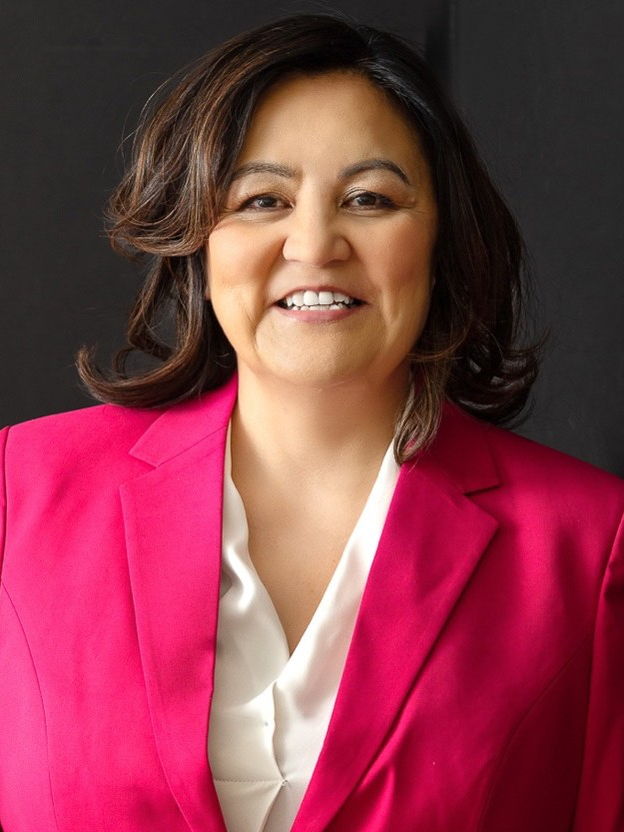
Karen Ogen
Karen Ogen is a Wet’suwet’en leader and economic development advocate who pursued the IBL EMBA to deepen her understanding of nation building, economic strategy, and sustainable development. A former elected chief and the founding CEO of the First Nations Natural Gas Alliance, she is focused on advancing economic reconciliation and creating opportunities that improve well-being in Indigenous communities.
My journey
Karen Ogen is a member of the Wet’suwet’en First Nation, from the Bear Clan. She credits much of her leadership foundation to her late mother, hereditary chief Sophie Ogen, who she describes as a trailblazer for women in leadership and someone whose community work continues to inspire her.
Karen lives in Chilliwack and is a proud parent of two adult children. Her personal journey—and her commitment to community—has been shaped by both family and lived experience, and by a longstanding desire to create positive, lasting change for her people.
Starting out from a background in social work, Karen could see that it was important to help her people deal with their unresolved generational trauma—but she was curious about the economic piece. “How can we flip the script and move forward—economically?” she says. “I knew basic economic development and I was learning that our economy is what helps our people. So how do we build our economy?”
Why I chose the IBL EMBA
Karen came to the IBL EMBA after hearing consistently strong recommendations from colleagues and peers, including leaders from northern communities. After serving as chief of her nation from 2010 to 2016, she wanted to build on her background in social work by strengthening her understanding of economic development—especially how communities can move forward economically while also addressing the realities of intergenerational trauma and systemic exclusion.
For Karen, the program offered a way to better understand how economies function, how major projects shape regions, and how Indigenous communities can build capacity and participate meaningfully in decisions that affect their lands and futures. She was particularly drawn to learning more about nation building and the practical tools needed to strengthen long-term community well-being.
“When you step up to leadership, you gotta make some choices,” says Karen. “You can either just maintain a status quo or you can look outside the box and find ways and means to build up your people. And that meant driving our economy. So, how do we do that? I wanted to learn more of the nuts and bolts on how we can empower our community and how we can build up our community economically.”
Highlights
One of the most significant takeaways from Karen’s EMBA experience was gaining practical skills—such as financing, building business plans, and understanding what it takes to grow an economy—that she could apply immediately to her work. The program also strengthened her perspective on how local decisions connect to broader forces, including the global economy and Canada’s natural resource landscape.
Karen cites specific instructors and courses as standouts, including Dr. John Burrows’s teaching approach and the content of his course, as well as Dr. Dara Kelly’s courses, which she found deeply inspiring and motivating.
“Dr. Burrows is a very educated man, but he always comes from a place of humility and I just admired that—he embodies what he teaches,” says Karen. “The law aspect of the learning was of real interest to me and I even bought his books to try and follow the work that he’s doing. And Dr. Kelly is so inspirational and makes me want to keep moving forward and learning.”
Where I am today
Karen is the founding CEO of the First Nations Natural Gas Alliance, an Indigenous-led organization established to support informed decision-making around LNG and related issues. She created the Alliance in part because Indigenous communities were often excluded from major industry tables—and because she believed communities deserved access to clear information to make their own decisions.
“In the past, there were no Indigenous people at the table,” says Karen. “So we just formed our own table. For us, it’s about democracy. People should be able to say yes or no—but they should be informed first.”
Looking ahead
Karen continues to advocate for northern communities and for greater representation of northern perspectives in programs and decision-making spaces. She also hopes to see more elders—beyond the Lower Mainland—in leadership learning environments.
She also emphasizes the importance of major projects and global economics.
“I think those are critical components to looking at the bigger picture in terms of our economy,” says Karen. “That’s how to broaden my horizons—to look at things globally and how it impacts Canada and our Indigenous people. I continue to learn every day.
Her long-term goal remains clear: to build sustainable economic pathways that are grounded in responsibility to the environment, informed community consent, and tangible improvements for Indigenous peoples—now and for generations to come.